

Peri-Implantitis and Peri-Mucositis: Prevention, Causes, Treatment, and Long-Term Implant Health
Dental implants have transformed tooth replacement by providing highly predictable and long-lasting results. However, implants are not immune to complications. Two of the most common biological complications affecting dental implants are peri-mucositis and peri-implantitis. Left untreated, these conditions can lead to inflammation, bone loss, implant failure, and the need for complex corrective treatment.
Understanding how peri-implant disease develops—and how proper planning, surgical execution, prosthetic design, and maintenance can reduce risk—is essential for clinicians and patients alike. At IrriGUIDE Lab, we believe that preserving healthy bone at the time of implant placement is one of the foundational steps in reducing the risk of future peri-implant disease. Our focus on irrigation-integrated surgical guides is based on the principle that improved osteotomy cooling may help protect bone vitality, support successful osseointegration, and contribute to long-term implant health. Read more about the relationship between bone health, guided surgery, and peri-implant disease prevention below.
Page Contents
ToggleWhat Is Peri-Mucositis and Peri-Implantitis?
Dental implants have become one of the most successful and predictable treatment options in modern dentistry. While implant success rates remain high, implants are still susceptible to biological complications that can threaten their long-term stability. The two most common inflammatory conditions affecting dental implants are peri-mucositis and peri-implantitis.
Although these conditions share similarities, they represent different stages of disease progression. Understanding the distinction between them is critical because early intervention can often prevent significant bone loss and implant failure.
Understanding Peri-Mucositis
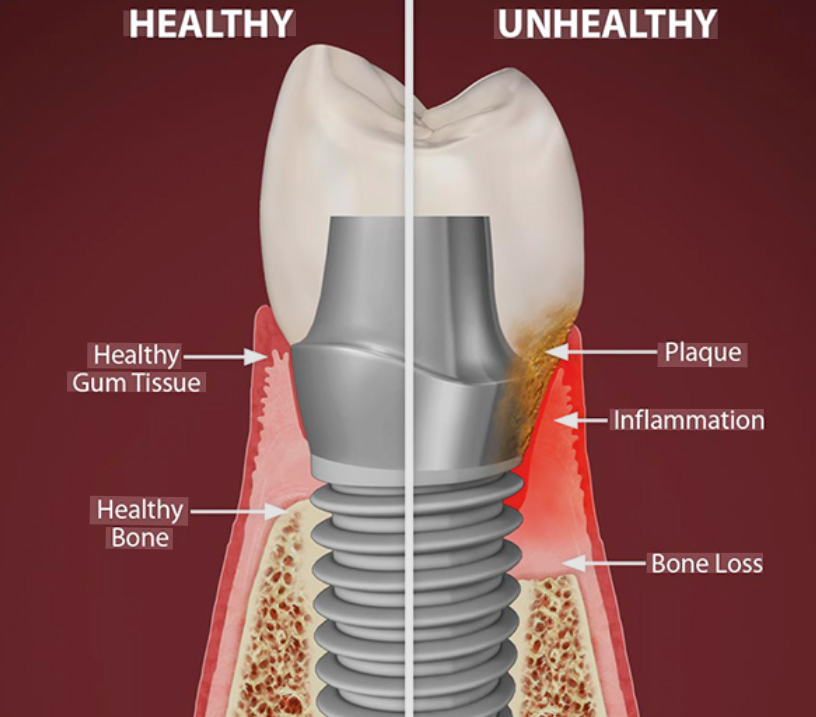
Peri-mucositis is an inflammatory condition affecting the soft tissues surrounding a dental implant. It is often considered the implant equivalent of gingivitis around natural teeth. The condition develops when bacterial plaque and biofilm accumulate around the implant restoration and trigger an inflammatory response in the surrounding tissues.
Patients may notice redness, swelling, tenderness, or bleeding during brushing and flossing. In many cases, there may be no discomfort at all, making routine maintenance examinations particularly important. Unlike peri-implantitis, peri-mucositis does not involve loss of the supporting bone around the implant. Because bone remains intact, the condition is generally reversible when diagnosed early and treated appropriately.
Understanding Peri-Implantitis
Peri-implantitis represents a more advanced stage of peri-implant disease in which inflammation extends beyond the soft tissues and begins destroying the supporting bone around the implant. As bone loss progresses, the implant loses the structural support necessary for long-term function.
Clinical signs may include bleeding during probing, suppuration, increasing pocket depths, gum recession, exposed implant threads, and progressive radiographic bone loss. In severe cases, the implant may become mobile and require removal. Because lost bone is difficult to regenerate predictably, prevention and early diagnosis remain the most effective strategies for managing peri-implantitis.
Why Peri-Implant Disease Is Increasing
Peri-implant disease has become one of the most significant challenges facing implant dentistry today. As more patients receive dental implants and existing implants age, clinicians are encountering higher numbers of cases involving peri-mucositis and peri-implantitis.
Several factors contribute to this trend. Implant therapy is now being performed in increasingly complex clinical situations, including full-arch rehabilitations, immediate implant placement, and extensive grafting procedures. At the same time, patients are living longer and retaining their implant restorations for decades, creating more opportunities for complications to develop.
More Implants Means More Maintenance Challenges
The growth of implant dentistry has been accompanied by a growing need for long-term maintenance. Unlike natural teeth, implants lack a periodontal ligament and possess a different biological attachment to surrounding tissues. As a result, inflammation can progress differently and sometimes more aggressively once disease becomes established.
Full-arch implant restorations present additional challenges because patients often have limited access beneath the prosthesis for daily cleaning. Even highly motivated individuals may struggle to remove plaque effectively if the prosthesis design restricts hygiene access.
The Importance of Long-Term Monitoring
Implant therapy should never be viewed as a one-time procedure. Successful implant treatment requires ongoing monitoring and maintenance throughout the life of the restoration. Regular evaluations allow clinicians to identify tissue inflammation, bone changes, prosthetic complications, and hygiene deficiencies before irreversible damage occurs.
Routine maintenance visits typically include clinical examinations, radiographic assessments, professional biofilm removal, occlusal evaluation, and review of the patient’s home care techniques. Early detection remains one of the most powerful tools in preventing peri-implant disease progression.
The Biological Causes of Peri-Implant Disease
Peri-implantitis is a multifactorial disease, but bacterial biofilm remains the primary initiating factor. The biological processes that occur around dental implants share many similarities with periodontal disease around natural teeth, although important differences exist.
When bacterial plaque accumulates around implant surfaces, inflammatory mediators are released into the surrounding tissues. Over time, this chronic inflammatory response can damage soft tissue attachment and contribute to progressive bone destruction.
Bacterial Biofilm and Plaque Accumulation
Dental biofilm is a complex community of microorganisms that adheres to both natural teeth and implant restorations. When oral hygiene is inadequate, pathogenic bacteria proliferate and trigger an inflammatory response in the tissues surrounding the implant.
Initially, this inflammation may present as peri-mucositis. If bacterial accumulation continues and the inflammatory burden increases, the condition can progress to peri-implantitis with associated bone loss. The prevention of biofilm accumulation remains the foundation of long-term implant maintenance.
The Role of Implant Surface Characteristics
Modern implant surfaces are intentionally roughened to improve osseointegration and enhance initial bone attachment. While these surface modifications provide significant benefits during healing, they can also create challenges once implant threads become exposed due to bone loss.
Exposed rough implant surfaces provide an ideal environment for bacterial colonization and are often difficult to decontaminate completely. This is one reason why early intervention before significant bone loss develops is so important.
Soft Tissue Health Around Implants
Healthy peri-implant soft tissues serve as the first line of defense against bacterial invasion. Thick, stable soft tissues with adequate keratinized mucosa may improve patient comfort during oral hygiene and help maintain long-term tissue health.
Conversely, inadequate soft tissue volume, recession, inflammation, or prosthetic designs that create plaque-retentive areas can increase susceptibility to peri-implant disease. Implant planning should therefore consider both hard tissue and soft tissue management from the outset.
The Critical Role of Bone Health
The long-term success of a dental implant depends on maintaining healthy supporting bone. Bone not only anchors the implant but also distributes functional forces generated during chewing and speaking. Once bone loss begins, the risk of implant complications increases significantly.
Peri-implant bone loss can result from a variety of factors including bacterial infection, excessive mechanical loading, surgical trauma, poor implant positioning, and thermal injury during implant placement.
Bone Stability Is Essential for Implant Longevity
Stable bone levels around an implant are one of the most important indicators of long-term success. Small amounts of remodeling following implant placement may be expected, but progressive bone loss is generally considered pathological and requires investigation.
When supporting bone is lost, deeper pockets may develop around the implant, creating an environment that is increasingly difficult for patients to clean. This can accelerate disease progression and lead to a cycle of ongoing inflammation and bone destruction.
Thermal Injury During Implant Placement
Bone health begins at the time of surgery. Excessive heat generation during osteotomy preparation can damage osteocytes and compromise the bone’s ability to heal properly around the implant. Research has shown that temperatures exceeding critical thresholds may result in thermal necrosis and impaired osseointegration.
Proper irrigation during implant osteotomy preparation is essential for dissipating heat and protecting bone vitality. Integrated irrigation technologies such as IrriGUIDE® are designed to improve delivery of cooling solution directly to the osteotomy site throughout guided implant surgery. Read more about bone necrosis.
Bone Remodeling and Long-Term Stability
Healthy bone remodeling is a natural physiological process that occurs throughout the life of an implant. However, excessive remodeling or progressive crestal bone loss may indicate biological or mechanical complications that require intervention.
Clinicians should evaluate radiographic changes over time and correlate findings with clinical symptoms to identify potential problems before significant bone destruction occurs.
Mechanical Factors That Contribute to Peri-Implantitis
While bacterial biofilm is the primary cause of peri-implant disease, mechanical factors often play a significant role in initiating or accelerating bone loss around dental implants. Excessive forces, poor implant positioning, and prosthetic complications can create an environment where inflammation develops more easily and progresses more rapidly. Successful implant treatment requires not only healthy tissues but also a biomechanically sound restoration that distributes forces appropriately.
Occlusal Overload
Dental implants differ from natural teeth because they lack a periodontal ligament. Natural teeth possess microscopic shock-absorbing capabilities that help dissipate occlusal forces during function. Implants, however, transmit forces directly to the surrounding bone. When excessive forces are present, the implant-bone interface may become overloaded.
Occlusal overload alone may not directly cause peri-implantitis, but it can contribute to crestal bone loss, component loosening, prosthetic fractures, and tissue inflammation. In patients who already have plaque accumulation and soft tissue inflammation, excessive loading may accelerate disease progression. Careful occlusal design, proper implant distribution, and regular maintenance evaluations help minimize these risks.
Misaligned Implant Positioning
The position of an implant has a profound impact on both restorative success and long-term maintainability. Implants placed too far facially, lingually, mesially, or distally may force the restorative team to create compensatory contours that are difficult to clean.
Poor implant positioning often results in over-contoured restorations, inaccessible embrasures, excessive cantilevers, and areas where plaque can accumulate. Even a highly motivated patient may struggle to maintain hygiene if the restoration was not designed with cleansability in mind. This is one reason why prosthetically driven implant planning has become the standard of care in modern implant dentistry.
Prosthetic Complications
Mechanical complications frequently contribute to biological complications. Loose prosthetic screws, fractured components, open margins, and worn restorative materials can create areas where bacterial plaque accumulates. Small gaps between components may harbor bacteria and contribute to chronic inflammation of surrounding tissues.
Routine maintenance visits should include inspection of all restorative components. Identifying and correcting minor prosthetic issues early may help prevent more significant biological complications in the future.
Prosthetic Design and Its Impact on Implant Health
The final restoration is often the most overlooked factor influencing peri-implant health. While surgical placement receives significant attention, long-term implant success frequently depends on whether patients can effectively clean around and beneath their restorations. A beautifully designed prosthesis that is impossible to clean may ultimately compromise implant longevity.
Modern implant treatment planning should therefore prioritize not only esthetics and function, but also long-term maintenance and hygiene accessibility.
The Importance of Cleansability
One of the strongest predictors of long-term implant success is the patient’s ability to remove plaque effectively. If patients cannot access critical areas around the restoration, bacterial biofilm will accumulate regardless of their motivation.
Restorations should be designed to allow access for floss, interdental brushes, water irrigation devices, and other hygiene aids. The easier a restoration is to clean, the more likely patients are to maintain a consistent oral hygiene routine.
Emergence Profile Design
The emergence profile describes the transition between the implant platform and the visible restoration. This area plays an important role in tissue health, esthetics, and cleansability.
Excessively convex emergence profiles may trap plaque and create sheltered environments where bacteria can proliferate. Conversely, properly designed emergence profiles facilitate tissue health while providing patients with improved access for hygiene procedures.
A prosthetically driven approach ensures that implant position and restorative contours work together to support long-term peri-implant health.
Full-Arch Implant Prostheses
Full-arch implant bridges present unique hygiene challenges because patients must clean beneath a large fixed prosthesis that often extends across the entire arch. Food debris, bacterial plaque, and biofilm can accumulate beneath the restoration if adequate access is not provided.
The design of the tissue-facing surface can significantly impact cleansability. Restorations that allow easy access for flossing and irrigation devices generally support better long-term maintenance. This concept has become increasingly important as clinicians seek ways to reduce peri-implantitis in All-on-X and other full-arch implant reconstructions.
Why Implant Hygiene Is Essential
Effective oral hygiene remains the single most important factor under a patient’s control for preventing peri-mucositis and peri-implantitis. Even perfectly placed implants and well-designed restorations require daily plaque removal to maintain healthy tissues.
Patients often assume that implants are immune to disease because they cannot develop cavities. While implants do not decay, they remain highly susceptible to inflammatory conditions caused by bacterial biofilm accumulation.
Daily Plaque Removal
The goal of daily home care is to disrupt bacterial biofilm before it matures into a more pathogenic bacterial community. Consistent plaque removal reduces inflammation and helps maintain stable peri-implant tissues.
Patients should be instructed in implant-specific maintenance techniques and monitored regularly to ensure their home care methods remain effective. Small improvements in hygiene compliance can have significant impacts on long-term implant outcomes.
Cleaning Under Implant Bridges
One of the most challenging aspects of implant maintenance is cleaning beneath fixed implant bridges. Conventional floss may be difficult to pass beneath restorations, particularly in posterior regions or beneath full-arch prostheses.
Patients often require specialized hygiene devices designed specifically for implant restorations. Water irrigation systems, floss threaders, implant floss, and dedicated bridge-cleaning devices can all play an important role in maintaining tissue health around fixed prostheses.
Full-Arch Implant Maintenance
Patients with All-on-X restorations require lifelong maintenance. Because these restorations remain fixed in place, plaque accumulation beneath the prosthesis may go unnoticed until significant inflammation develops.
Comprehensive maintenance programs should include professional cleanings, periodic prosthesis removal when indicated, radiographic monitoring, and reinforcement of home care techniques. Long-term success depends upon a partnership between the patient, restorative dentist, surgeon, and hygienist.
Risk Factors for Peri-Implantitis
Peri-implantitis is a multifactorial disease. While bacterial plaque serves as the primary initiating factor, numerous patient, surgical, and restorative variables may increase susceptibility to disease progression.
Understanding these risk factors allows clinicians to identify high-risk patients and implement preventive strategies before complications develop.
Patient-Related Risk Factors
Several patient-related factors have been associated with increased rates of peri-implant disease. A history of periodontal disease remains one of the strongest predictors of future peri-implantitis because susceptible patients often harbor bacterial populations capable of affecting both teeth and implants.
Smoking, uncontrolled diabetes, poor oral hygiene, and inconsistent maintenance visits can also compromise tissue health and increase the likelihood of disease progression. Patient education and risk assessment should therefore be incorporated into every implant treatment plan.
Implant-Related Risk Factors
Implant design and restorative factors may also influence peri-implant health. Residual cement, inadequate soft tissue dimensions, poor prosthetic contours, and implant malposition can all contribute to plaque accumulation and tissue inflammation.
The risk associated with these factors underscores the importance of comprehensive treatment planning and close collaboration between the surgical and restorative teams.
Surgical Risk Factors
Surgical variables can influence implant health long before symptoms appear. Improper implant positioning, inadequate primary stability, insufficient irrigation, excessive heat generation, and inadequate hard or soft tissue support may all increase future risk.
Preventing complications begins with careful diagnosis, accurate surgical execution, and preservation of healthy supporting tissues during implant placement.
Diagnosing Peri-Implant Disease
Early diagnosis dramatically improves treatment outcomes. The earlier peri-mucositis or peri-implantitis is identified, the greater the opportunity to prevent irreversible bone loss and preserve implant stability.
Regular monitoring is therefore essential throughout the life of the implant restoration.
Clinical Examination
Clinical evaluation remains the foundation of peri-implant disease diagnosis. Signs of disease may include bleeding on probing, increased probing depths, suppuration, tissue swelling, recession, and changes in tissue color or contour.
Comparing findings over time allows clinicians to identify subtle changes that may indicate early disease progression.
Radiographic Assessment
Radiographs provide critical information regarding bone levels surrounding dental implants. Baseline radiographs taken at restoration delivery serve as valuable references for future comparisons.
Progressive crestal bone loss, vertical defects, and circumferential defects may all indicate peri-implantitis. Radiographic findings should always be interpreted in conjunction with clinical signs and symptoms.
Treatment of Peri-Mucositis
Peri-mucositis represents the most favorable stage for intervention because bone support remains intact. When diagnosed early, treatment is often successful and may completely reverse the inflammatory process.
The primary objective is elimination of bacterial biofilm and restoration of healthy peri-implant tissues.
Early Intervention Matters
Patients frequently experience little or no discomfort during early disease stages. As a result, routine maintenance visits often play a critical role in identifying peri-mucositis before progression occurs.
Professional cleaning, improved home care, elimination of plaque-retentive factors, and reinforcement of maintenance protocols can often resolve inflammation and restore tissue health.
Patient Education
Successful treatment depends heavily on patient participation. Patients must understand that implant maintenance is a lifelong commitment and that daily plaque removal is essential for protecting their investment.
Educational efforts should focus on both disease prevention and proper use of implant-specific hygiene devices.
Treatment of Peri-Implantitis
Unlike peri-mucositis, peri-implantitis involves loss of supporting bone and often requires more complex treatment. The primary goals are to arrest disease progression, reduce bacterial contamination, and preserve remaining bone support whenever possible.
Treatment recommendations depend upon disease severity, defect morphology, and patient-specific risk factors.
Non-Surgical Treatment
Initial therapy typically focuses on biofilm disruption and reduction of inflammation. Mechanical debridement, implant surface decontamination, antimicrobial therapies, and improved home care may help stabilize early disease.
However, non-surgical therapy alone often has limited effectiveness once significant bone loss has occurred.
Surgical Treatment
Advanced peri-implantitis frequently requires surgical intervention. Surgical access allows clinicians to visualize implant surfaces, remove granulation tissue, detoxify contaminated areas, and perform regenerative procedures when appropriate.
Depending on defect characteristics, treatment may include bone grafting, membrane therapy, implantoplasty, or soft tissue grafting procedures designed to improve both function and maintainability.
Implant Removal
In severe cases where extensive bone loss has occurred, implant removal may represent the most predictable treatment option. While implant removal is generally considered a last resort, preserving overall oral health remains the primary objective.
Early diagnosis remains the best strategy for avoiding this outcome.
How Proper Implant Planning Reduces Peri-Implantitis Risk
Many risk factors associated with peri-implant disease can be addressed before surgery even begins. Comprehensive planning allows clinicians to optimize implant positioning, improve restorative contours, and facilitate long-term hygiene access.
Prosthetically Driven Implant Placement
The final restoration should guide implant positioning—not the other way around. Prosthetically driven planning ensures that implants emerge in locations that support esthetics, function, and cleansability.
This approach frequently reduces plaque-retentive contours and improves the patient’s ability to maintain healthy tissues around the restoration.
Guided Surgery Improves Accuracy
Computer-guided implant surgery enables clinicians to transfer a restorative plan accurately to the surgical environment. Improved accuracy can enhance implant positioning, optimize restorative outcomes, and reduce the need for compensatory prosthetic designs.
Accurate implant placement often contributes directly to improved hygiene access and long-term maintainability.
The Role of Irrigated Surgical Guides
Preserving bone health begins at the time of implant placement. Adequate irrigation during osteotomy preparation helps control heat generation and protect vital bone structures.
Integrated irrigation systems such as IrriGUIDE® technology deliver cooling solution directly to the osteotomy site during guided surgery, supporting bone vitality and helping clinicians address one of the important biological factors associated with long-term implant success. Read more about bone necrosis.
Long-Term Maintenance for Dental Implant Success
Successful implant treatment does not end when the final restoration is delivered. Long-term success depends upon ongoing maintenance, professional monitoring, and patient compliance.
Implants should be viewed as lifetime restorations requiring continuous care and attention.
Professional Maintenance Visits
Regular maintenance appointments allow clinicians to evaluate implant health, monitor bone levels, assess prosthetic integrity, and reinforce home care instructions. These visits often identify early signs of disease before patients become aware of symptoms.
Home Care Compliance
Long-term implant success depends on the patient’s ability to remove plaque and biofilm consistently every day. This is particularly important for patients with implant bridges, hybrid prostheses, and full-arch implant restorations where traditional flossing methods may be challenging.
Many peri-implantitis cases begin when plaque accumulates beneath fixed restorations that patients cannot easily access. The AutoFlosser® was specifically developed to help patients clean beneath implant bridges, All-on-4®, and All-on-X restorations by guiding floss under the prosthesis quickly and efficiently. By simplifying plaque removal in these difficult-to-reach areas, patients are more likely to maintain a consistent oral hygiene routine and protect the tissues supporting their implants.
Combining mechanical plaque removal with water irrigation and routine professional maintenance provides one of the most effective strategies for reducing peri-implant disease risk.
Prevention Is Easier Than Treatment
Peri-implantitis can be difficult, expensive, and time-consuming to treat. Preventive planning, precise implant placement, cleansable prosthetic design, effective home care, and regular maintenance remain the most predictable methods for protecting implant health and maximizing long-term success.
Related Resource: Learn more about cleaning beneath implant bridges and full-arch restorations with The AutoFlosser®.
Protecting Dental Implants Through Planning, Design, and Maintenance
Peri-mucositis and peri-implantitis are complex conditions influenced by biological, mechanical, surgical, restorative, and patient-related factors. While no single strategy can eliminate risk entirely, comprehensive planning and preventive care can dramatically improve outcomes.
Successful implant therapy begins with healthy bone, accurate implant placement, and restorations designed for long-term cleansability. Through prosthetically driven planning, guided surgery, integrated irrigation technology, thoughtful prosthetic design, and patient-centered maintenance protocols, clinicians can reduce the risk of peri-implant disease and help patients enjoy healthier, longer-lasting implant restorations.